The Blood Sugar Roller Coaster: Why Your Energy Feels Up and Down All Day
✦ Nutrition & Education · Energy & Hormones · Nourished Living ✦
The Blood Sugar Roller Coaster: What It Is and How to Get Off It
A simple, honest guide to understanding your energy, your cravings, and what your body is actually asking for.
Have you ever eaten something sweet, felt a quick burst of energy, and then completely crashed an hour later? Tired, foggy, irritable, maybe reaching for coffee or something sugary just to get through the afternoon?
If that sounds familiar… you’ve experienced the blood sugar roller coaster.
I’ve felt this too. For years, I thought feeling drained after meals was just part of being busy. Normal, even. It wasn’t until I learned how blood sugar actually works that everything started to shift. I built small, supportive habits that helped me feel steadier, more grounded, and genuinely more in control of my days.
And you can do the same.
What Is the Blood Sugar Roller Coaster?
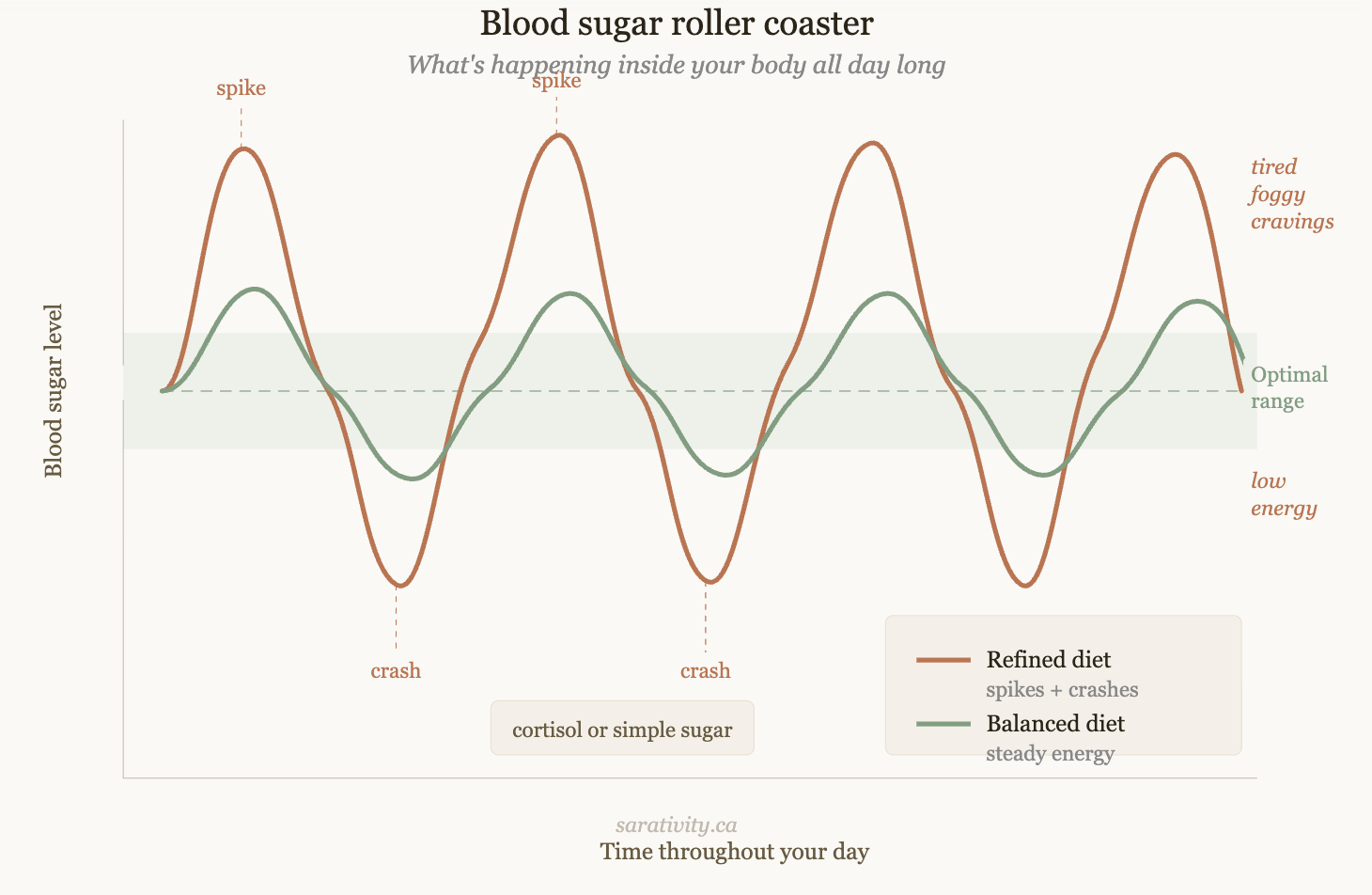
Picture a roller coaster with sharp peaks and steep drops. That’s what’s happening inside your body when you eat mostly simple carbohydrates or sugary foods on their own. Think white bread, chips, or a candy bar.
Here’s how the cycle typically plays out:
You eat something sweet or refined… your blood sugar rises quickly… you feel a short burst of energy… and then it drops just as fast. You crash. You crave more sugar or caffeine to bring yourself back up. And the whole thing repeats again.
All day long.
Over time, this cycle can affect your mood, your energy, your metabolism, your hormones and your overall sense of wellbeing. Some of the most common signs of blood sugar swings include low energy, brain fog, irritability, intense cravings, difficulty concentrating, disrupted sleep, and that relentless afternoon slump that no amount of coffee seems to fix.
Understanding this cycle is the first step to changing it. This is about prevention, finding a sustainable path forward before things escalate.
What Balanced Blood Sugar Actually Feels Like
There are two very different patterns when it comes to blood sugar. One where it rises gently and stays steady throughout the day. And one where it spikes sharply and crashes hard.
The difference between these two patterns shapes how you feel from the moment you wake up to the moment your head hits the pillow.
Balanced blood sugar supports steady energy, a more settled mood, fewer cravings, clearer thinking, and a calmer nervous system. When your blood sugar is unbalanced, you tend to feel the opposite of all of those things.
It is not a willpower problem. It is a physiology problem. And it has a solution.
How Stress Fits Into the Picture
Here’s something that surprised me when I first learned it: stress alone can raise your blood sugar, even without food.
When you’re stressed, your body releases cortisol, your primary stress hormone. Cortisol naturally raises blood sugar because your body thinks you need quick energy to respond to a threat. This was a brilliantly useful response back when humans were being chased by predators. Your body would shut down digestion and flood your system with glucose so you could run.
The challenge is that your body responds exactly the same way today, whether the stressor is a work deadline, a difficult conversation, or a stressful email landing in your inbox at 9pm.
The physiology hasn’t changed. Which means managing stress is genuinely part of managing your blood sugar too.
Five Simple Ways to Support More Balanced Blood Sugar
These aren’t dramatic overhauls. They’re small, gentle shifts that add up over time.
1. Stay hydrated. Dehydration can make blood sugar swings feel more intense. Something as simple as drinking water consistently throughout the day helps your body stay balanced.
2. Build balanced meals using the Magic Plate. When your plate includes protein, fibre-rich carbs, vegetables, and healthy fats, digestion slows down and blood sugar stays steadier. Check out my Magic Plate blog post for the full breakdown!
3. Eat at consistent times. Skipping meals can lead to crashes and overeating later. Regular, nourishing meals help your body feel safe and supported throughout the day.
4. Move your body after meals. Even a short walk or a few trips up and down the stairs after eating can help your body use glucose more effectively. It doesn’t need to be a workout. Just movement.
5. Prioritize good quality sleep. Poor sleep increases cravings and makes blood sugar regulation harder. Rest is not optional. It’s part of the foundation.
Small changes. Real difference. That’s what this is all about.
A Gentle Closing Note
You deserve to feel steady, energized, and supported throughout your day. Understanding your blood sugar is one of the most empowering steps you can take toward feeling better in your body and your mind.
If you want to go deeper into healing your relationship with food, cravings, and energy, I’d love to support you. Explore my free mini course as a gentle next step toward feeling more balanced and connected to your wellbeing.