Your Body Isn’t Broken. Your Blood Sugar Might Just Need Some Support.
✦ NUTRITION EDUCATION · BLOOD SUGAR · ENERGY ✦
Your Body Isn’t Broken. Your Blood Sugar Might Just Need Some Support.
Why you’re always hungry an hour after eating and the gentle shift that actually helps.
You eat a meal. A decent one, even. And then an hour later, you’re rummaging through the kitchen again, wondering what’s wrong with you.
Or maybe it’s the 2pm crash, the one where your eyes feel heavy and your brain just stops cooperating no matter how much sleep you got. Or the cravings that hit like clockwork after dinner. Or the waking up at 3am absolutely starving.
If any of that sounds familiar, I want to start with this: there is nothing wrong with you. Your body is responding to inputs. And once you understand what those inputs are, you have real power to change how you feel.
Your hunger, your crashes, your cravings are NOT character flaws. They’re data.
1. The Blood Sugar Roller Coaster
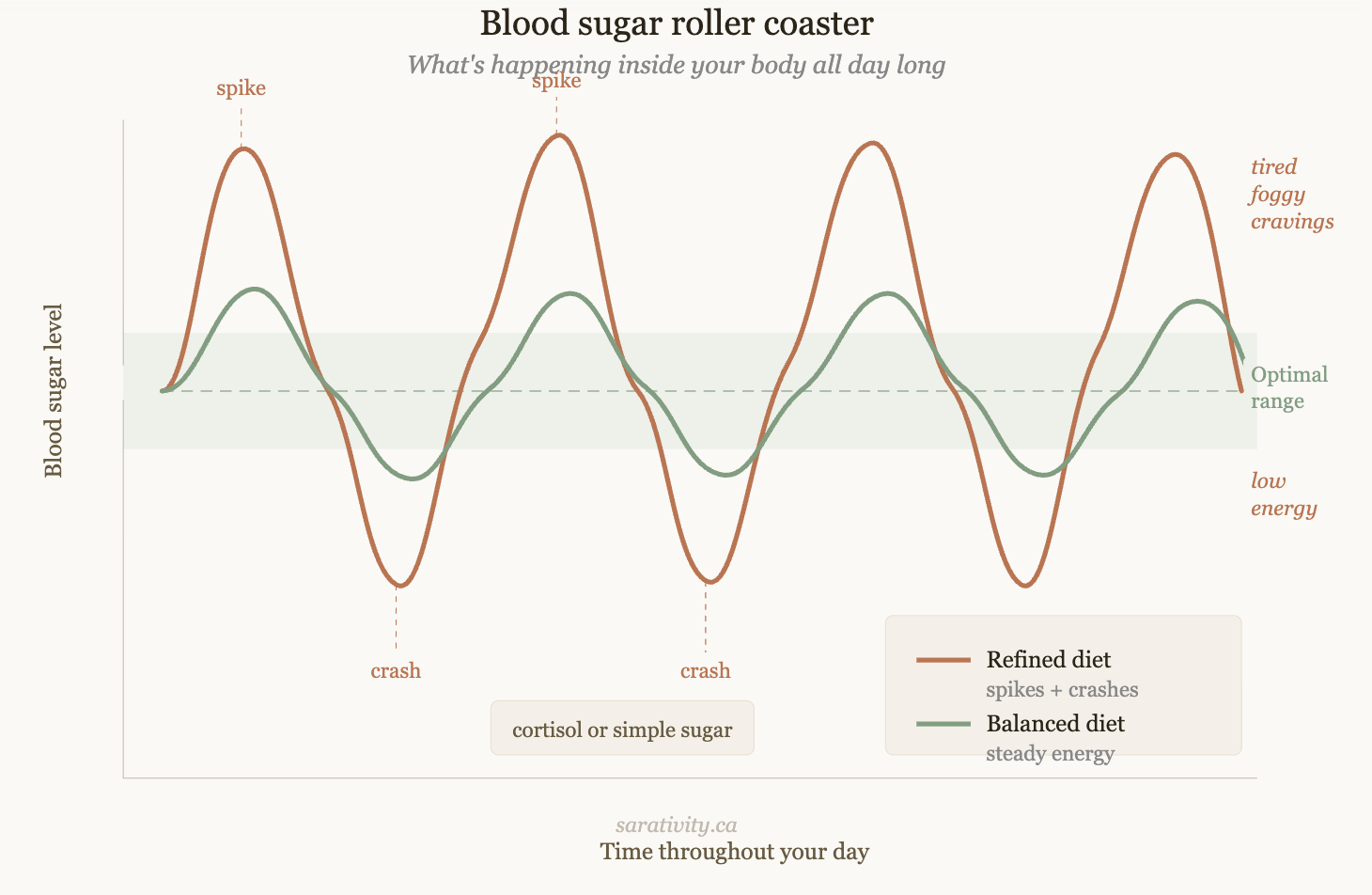
Here’s the basic picture. When you eat carbohydrates, especially refined ones without much protein, fat, or fibre to slow things down…your blood sugar rises quickly. Your pancreas releases insulin to bring it back into a normal range. And then comes the drop.
That drop is what causes the crash. The fatigue. The sudden desperate need for something sweet. The mood shift that makes you a little less fun to be around by mid-afternoon. It’s not weakness. It’s just chemistry.
And here’s the part that most people don’t realize: the higher the spike, the harder the crash. So when we reach for something sugary to feel better, we start the cycle all over again. Up, down. Up, down. Your body working overtime all day just trying to find its footing.
2. What’s Keeping You on the Ride
A few patterns that tend to keep blood sugar unstable and you might recognize yourself in more than one:
Eating carbs alone. Toast and jam. Crackers as a snack. A bowl of cereal. Without protein and fat alongside, glucose hits your bloodstream fast.
Going too long between meals. When we skip meals or stretch too many hours between eating, blood sugar drops. When it drops too low, your body sounds the alarm where cravings, brain fog, irritability and anything with quick sugar starts to look incredibly appealing.
Chronic stress. This is the one that surprises people most. Cortisol is your primary stress hormone and it actually raises blood sugar even without food. So if your nervous system is running on high all day, your blood sugar is probably doing the same.
Skimping on protein, especially in the morning can encourage the blood sugar roller coaster. Protein slows the release of glucose into the bloodstream. Without it, your first meal of the day sets you up for a spike before you’ve even had your second coffee.
Cortisol raises blood sugar even without food. Your stress and your blood sugar are more connected than you might think.
3. How to Step Off (Without Overhauling Your Life)
This is where things get practical. You don’t need to count anything, avoid everything, or follow a complicated eating plan. What you need is a balanced plate for most of your meals.
I teach something I call the Magic Plate and it’s exactly as simple as it sounds. When you build your meals around four key components of quality protein, healthy fat, fibre, and a complex carbohydrate, your blood sugar has a slow, steady rise and fall instead of a spike.
Protein: eggs, chicken, salmon, legumes, tofu. Fat: avocado, olive oil, nuts, seeds, tahini. Fibre: leafy greens, vegetables, berries. Complex carbs: quinoa, oats, sweet potato, whole grain bread.
You don’t need all four at every single snack. But when your main meals are built this way, your body knows how to handle them. Energy stays steadier. Hunger signals come at more predictable times. Cravings quiet down and not because you’re suppressing them, but because your body isn’t in crisis anymore.
Small, consistent shifts. That’s what actually works.
Start Here
If you take one thing from this post, let it be this: the way your body is responding right now makes complete sense given what it’s been given. You don’t need to be hard on yourself about it.
Try one thing this week. Add a protein source to your breakfast. Eat your snack with something more than just a piece of fruit. Sit down for lunch instead of eating standing over the counter or rushing.
Notice what happens. Your body will tell you a lot, if you give it a chance to be heard.
Ready to Take Action?
If you’re ready to dig into this more deeply like your blood sugar, your nervous system, your relationship with food, my Nutrition Game Changer Program is where we do that work together. It’s not about eating less. It’s about eating smarter, and feeling like yourself again. Book your free discovery call today.
With love, Sara 🌿